Welcome to my nature blog!

Welcome to my nature blog!

Saturday, June 21, 2014

SUMMER SOLSTICE AT DIAMOND GROVE PRAIRIE


Diamond Grove Prairie

 “I was raised on country sunshine, green grass beneath my feet.  
Running through fields of daisies, wading through the creek.”
--Country Sunshine by Dottie West 

I was not raised in the country, I grew up in suburban St. Louis.  But that did not stop me from seeking out any tiny patch of green grass, fields of flowers, or a creek to wade in when I was young.  Summer was an endless time of staying outdoors hours at a time, exploring natural places, and searching for anything wild; turtles, snakes, bugs, and lots of dirt. Not yet coming into my “naturalist mentality” yet, I brought home handfuls of wildflowers to grace our home. So it was fitting that I spent the summer solstice at a prairie.  


black eyed susan


golden winged skimmer
Diamond Grove dressed itself in my favorite color, yellow, for the first day of summer.  Purple headed sneeze-weed,  crownbeard, black eyed susans, and coreopsis created a yellow carpet wonderland for butterflies, dragonflies, and birds. 


sensitive brier
Contrasting colors came from bright red-orange indian paint brush, blue spider-wort, and pink sensitive brier. Hard to find milkwort, wild petunia, and deptford pinks shyly hid in the under story of the tall grasses.  It was a morning of prize after prize!


wild petunia


The longest day of the year is a great time to visit a prairie.  You can avoid the hot mid-day heat, and still have a lot of daylight in the cooler morning and evening.  Don't worry if you missed the opportunity today, tomorrow is the second longest day of the year!  


false dragonhead and purple headed sneezeweed

Monday, January 2, 2012

natural thoughts: NATURAL ORDER

natural thoughts: NATURAL ORDER: It took a long time for me to write this next blog. I had to take a hiatus’ from blogging because of so much destruction and sadnes...

NATURAL ORDER

     It took a long time for me to write this next blog.  I had to take a hiatus’ from blogging because of so much destruction and sadness after the Joplin tornado, and then, the loss of my husband of forty years.  But writing and blogging are important to healing for me, so I hope you will take some time to read this blog about the natural order of natural phenomenon.  Please comment if you like.
     Since I want to keep this blog about natural things, it seems right to discuss the Joplin tornado.  Tornados are a natural phenomenon, one we could do without, but part of nature like the seasons.  As a naturalist, I can fully accept the natural order of things.  I always find a balance; snakes eat rodents, birds eat snakes, and mammals eat birds.  There is good and bad in nature, life and death.  We have to take the good with the bad because that is how nature works.
     After the tornado, like a lot of people I had a hard time driving through the devastated area.  The only pictures I took of tornado damage were of this one tree.  It appears to be a hundred year old Osage Orange.   We had a large tree just like it in our backyard in Carthage.  My family loved that tree, not for the hard green balls it dropped on our cars, but because it seemed to radiate strength.  The smooth worn and twisted bark seemed to say, “I have survived many seasons.”  

     Trees like this became a bright spot for me, and probably others.  Regardless of the damage it suffered, the tree followed its God-given natural directive, and pushed out new leaves as it did every spring.  As people went about the business of cleaning up and putting lives back together, many paused to notice trees like this. They became symbols of renewal for the people of Joplin.
     As a Christian, I cannot help but believe that all things in nature were created by God.  I am constantly reminded of His greatness as I observe the natural order of things.  I believe God created the natural order of things at the same time He created our universe, and expects nature to run a random course.  Any lesson we can learn from nature is a good one.
     Charles Darwin, in his Origin of Species, said that nature is not complete and perfect, but constantly evolving.  I agree with his theory that chance determines the order of nature.  The tornado could have hit anywhere or not at all.  It wasn’t God’s punishment, it wasn’t Mother Nature showing her displeasure, and it was not a sign of anything.  It was pure chance.  Many random natural factors had to come together for it to occur and to occur at such a magnitude.
     So does that mean mankind is off the hook?  That we are not causing some of the natural phenomenon we’ve seen in the last decade? That we don’t need to worry about protecting nature? Of course not. 
     In Darwin’s theory of chance, mankind can intervene in chance relationships, and we often do.  Sometimes it’s in a negative way, and sometimes it’s positive.  Survival of the fittest seems to have been proven true over time.  But I don’t really care about theories.  I care about enjoying and protecting our natural surroundings.
     This quote has been attributed to Sir Karl Popper, a twentieth century philosopher, and it speaks to the thought that God is in control, but not necessarily intervening in every chance encounter in nature.

“If God had wanted to put everything into the universe from the beginning, He would have created a universe without change, without organisms and evolution, and without man and man's experience of change. But he seems to have thought that a live universe with events unexpected even by Himself would be more interesting than a dead one.”

     This says to me that we do have choices in how the order of things evolve.  We can choose to study and protect natural things or not.  We can try to push nature out of our lives with technology, or use every day we have to enjoy the sights and sounds of nature. We can, as the fittest, use up all our natural resources, or in that same regard, we can choose to create a shallower footprint on our world.
     Sir Popper also described the creativity of nature as the greatest riddle of complexity.  I certainly am glad that God created a universe that is not boring.  And I am also glad to have such a wonderful riddle to solve as I spend every day listening, watching and enjoying natural things.

Sunday, February 20, 2011

GUARANTEED STRESS RELIEF!

If you are not careful, you'll catch the winter blahs. You know them, muscle aches, headaches, fatigue, and STRESS! It's not the flu, but it is a sickness. Some people call it cabin fever, some use big words like Seasonal Affective Disorder. I call it TOO MUCH TIME INDOORS! But I have the cure.Take a nature walk. Get outside, regardless of the weather. Even fifteen minutes outside can cure the winter blahs. I promise you will feel better.

Studies have shown that just being outdoors contributes to overall good health.  Observing nature takes your mind off your troubles and relieves your stress.

Even in winter there is a lot to see if you know where to look.   In a park, along a walking trail, or in your back yard, there are winter wonders waiting for you to discover.  I try to get outside every day.  I look for unusual cloud formations, listen to bird songs, and try to identify trees by the bark.  Who says there is nothing "natural" to see in winter?

Today I walked a nearby trail along a stream.  I'm sure I got some needed rays so my vitamin D increased.  Listening to water flowing over riffles had a calming effect.  Observing and trying to identify bird songs challenged my mind without pressure.  I felt rested and relaxed, and ready for anything.

Just in case you cannot get outside today, you can come along on my winter walk with me. 

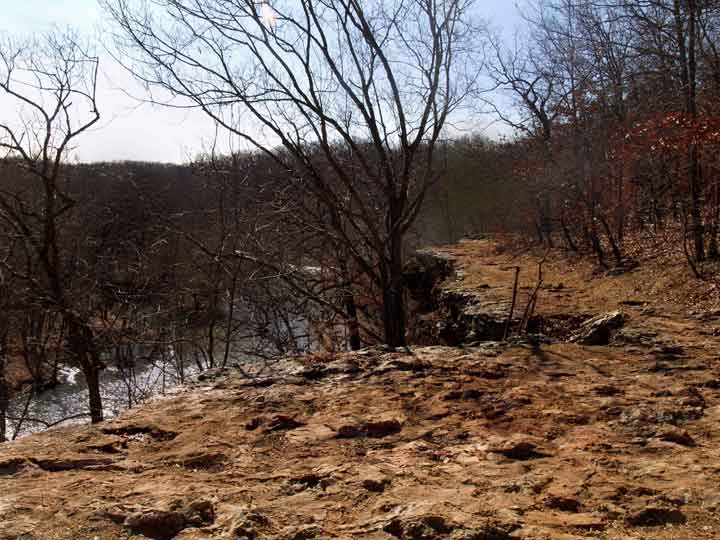
Shoal Creek, even with the bare trees and shrubs, it was a beautiful sunny day reflecting on the water. 

Fun fungi!  I had to climb over some brush and sit on a log to get this picture!


Ridge trail, you can see for miles. I sat on the rough rocks while the sun warmed me.


Studies have also shown that looking at pictures of natural scenes, while not the same as being there, can also have calming effects.  Enjoy some of my discoveries, but make a commitment to taking a real nature walk to relieve your stress. 

Sunday, January 16, 2011

THOUGHTS ABOUT BIRDS


Nature is . . .
Our best insurance for immortality. 
Eleanor Roosevelt

Winter is a good time to give some thoughts to birds.  We tend to notice them and actually pursue them in warmer weather, but winter is a great time to observe species that migrate through an area.  The cold and lack of food is a constant struggle for birds.  We need them, not just for their beauty and song, but because their presence is a reminder of our own mortality.

Last night I spent some time with a hardy group of birders, searching for Short-eared Owls on the prairie.   I’m pleased to say that I can add this species to my bird list.  It was very cold and eventually became too dark to observe them. But we could still hear their wondrous barks and calls.

Short-eared Owls are on the Audubon’s Watch List, listed as vulnerable worldwide, and listed as endangered in many states, including Missouri.  Man’s destruction of bird habitat is the number one reason for loss of species.  Sometimes a species of birds will simply leave an area for another place where their habitat exists.  But as we know, over time many species perish.  It’s hard to accept that we, all of us, may be responsible for the destruction of any species, but we are. 


The Osage had the right idea.  In their language, Mon Shon Akita, meant “stewards of the land.”  They recognized that they had a direct impact on natural communities, and lived in a manner to preserve rather than overcome nature.  Sad that today, mankind does not always recognize the importance of preservation.

Recent news reports about thousands of birds falling from the sky probably caused alarms in most people, even non-bird lovers.  While history is full of phenomenon like this, we should be alarmed, because somehow the death of this many birds at one time is likely caused by something humans did.

So when we are thinking about birds this winter, we need to think about what we can do to protect them.  Providing and preserving habitat is first.  Find out what you can do on your own property to promote bird habitat.  Recycle, and carefully dispose of trash.  Be responsible with pesticides and things that pollute water and soil. Get out and observe birds, learn about them, and pay attention to species that pass through. Know what birds are on endangered and watch lists. 

In the introduction to the 1950 Audubon book, Birds of America, Ludlow Griscom acknowledges certain traits that enabled John J Audubon to overcome immense hardships to pursue his life goal of listing and painting all the species of birds in America,

Audubon had enormous confidence in himself, inflexible determination, and the capacity of never admitting failure or becoming really discouraged.”

If each of us confidently and with inflexible determination, worked on the preservation and conservation of natural communities such as prairies and wetlands, choosing to never give up, just think about what we could accomplish!

Wednesday, December 8, 2010

FROST FLOWERS

Sometimes I think I am one of the luckiest people in the world.  God gave me a true love of the natural world, and everyday I find a prize:  a gorgeous sunrise or cloud formation, a soft supple petal on a flower, the extraordinary flight of an eagle.  And just recently, I was allowed the wonder of frost flowers blooming on the forest floor.

Frost flowers are an enigma, something I was not sure I believed in, having searched for them a long time.  It is easier not to believe in something you cannot see than to accept it exists but you are not smart enough or lucky enough to find it.  But my turn finally came.


My husband and I visited Flag Springs Conservation area last weekend.  We left early in the morning hoping to see some eagles on the way.  We got to Flag Springs around 9:30 a.m. with overcast skies and temperatures in the low twenties.  Along the side of the road, I began to see what looked like feathers on the ground. I wondered out loud why there were chicken feathers in this remote area.  My husband said the magic words that made me stop the car, "It looks like ice to me."

Evan though I had doubted their existence,  I had studied frost flowers hoping to learn some secret method of discovery. They typically occur the night of the first cold snap.  I understood the concept of water expanding when it freezes.  It made sense that they disappeared with the light of day and the sun's melting rays.  After all my studying and searching, there before me, the forest floor was covered with blooming frost flowers.


As is true with all natural things, sometimes you just need to be in the right place at the right time.  The lacy ribbons invited me to capture them with my camera, while my husband waited patiently in the car.


I am finally at peace with the visions of frost flowers that used to float through my dreams.  I have photographed them, touched their cold lacy ribbons, and watched as the sun quickly melted them away.   I happily join the ranks of the lucky ones who have seen and touched real frost flowers.  Secretly, I gloat that I am  likely the only human to have observed the beauty of a particular frost flower. However, I am also willing to share my experience and photographs with you in the hope that you will dream of them like I did, and next year you will find yourself outside on a cold winter morning in search of your own frost flower experience.


Sunday, November 14, 2010

AMAZING GRASS!


In late fall and early winter I love to find a patch of grasses on a sunny day, and just sit, watch, and reflect.  I used to hate winter with what I perceived to be its bleakness.  I would long for spring and the first showing of green things pushing up through the soil and on the tips of trees.  Winter used to give me the “blues” but I have learned to turn the blues into something golden. I once was lost in winter, but now I am found. I used to be blind, but now I see.  Amazing grass did that for me.

Grasses are a great contradiction - delicate but hardy – from seed head to root.  The feathery seeds ready to be carried in the wind belie the strong roots that can dig down ten feet into the ground in search of water. In the right conditions, some grasses can grow to ten feet high, and reseed year after year.  The root systems in native grasses actually add organic matter to the soil.

Native grasses provide habitat for insects, mammals and birds all year round. If you have enough time and sit quietly, you will see many visitors to your grassy area.  In fall, blue damsel flies stick out in a field of yellow stalks as they grab on and wave in the wind.  In winter, a rabbit timidly peeks through the golden stalks, his curiosity greater than his thoughts of safety.   If you are lucky, you might see a flash of yellow from a meadowlark, or the soft sky blue of a blue bird balancing on a nearby twig. 

Observing these critters amidst the gentle grass gives me time to ponder natural things and the interrelationship of species.  When tall grass prairies covered millions of acres of our land, the Osage understood this relationship.  They believed that knowledge came from observation and awareness.  In their search to understand nature, they realized the need to protect it.  Settlers discovered many uses for prairie grass, including using the intricate root systems found in the soil to build their sod houses.  Today, there are many who work with native prairie grasses to be grown as energy crops to make ethanol.  Amazing!

If you want to perk up this winter, take a hike to a place with native grasses.  Sit a while.  Observe.  Think.  As the silence is broken only by the golden shafts of grass rustling in the wind, and you observe the glowing seeds hanging on but ready to float through the air, I promise you will be refreshed.  You will feel the healing grace God intended for you by observing the wonders of nature found in a stand of amazing grass.

“We’ve no less days to sing God’s praise, then when we first begun.”